
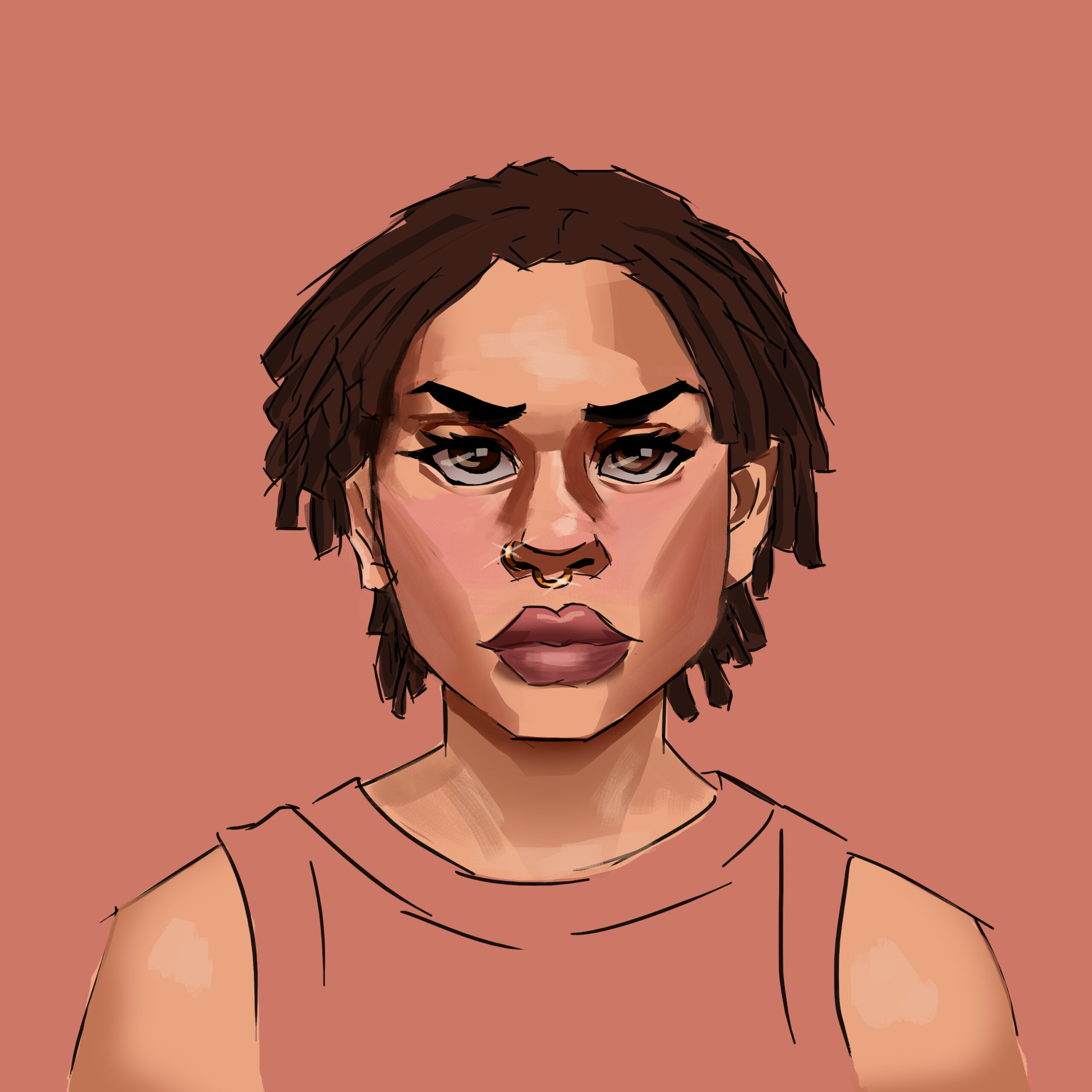
Mardiya is an award winning multi-genre technologist, researcher, and technology community movement builder. They co-create communal technology infrastructures and archiving knowledge through play, creative data work, and visual imagery. Their work is guided by collective calculated refusals against regimes of surveillance and extraction. Mardiya has received grant awards from Mozilla/ GIZ, APC, and the University of San Diego Kroc Institute of Peace and Justice, and has been featured in Bloomsbury Press, Feminist Africa, and Chatham House.

Miriam is a technologist, certified vibes-curator and self-acclaimed board games champion. Her work is focused on using technology to bring communities together and connect people with the resources they need to succeed. When she’s not at a desk, you can find her soaking in sunlight like a plant at any given opportunity.

Mardiya is a sociologist, researcher, creative technologist and community movement builder. They work on making connections between community infrastructure, spatiality and technology. Within their current journey, they are building the Flowers and Gardening Studio (F&G studio), which is their creative experimentation of a feminist outlet for play and creative imagination!
Mardiya started her journey as a researcher, investigating the effects of surveillance on minority communities. They went on to lead the global community of digital rights practitioners at Team Community, based at Article 19. At Team Community, Mardiya developed, and implemented strategies to weave and advance the sustainable movement building in digital rights communities within Africa, Asia, LATAM and MENA.
She was a Violence, Inequality and Peace fellow at University of San Diego’s Kroc Institute of Peace and Justice where she developed a research-based fiction work documenting the realities of existing in surveillance societies. Mardiya continues to lead various research projects, including ones investigating methods of grounding data governance and innovation policy in Africa, as a grant awardee of Mozilla’s joint initiative with GIZ and the African Union. Mardiya also developed a critique of quantitative data collection methodologies and framings of Tech-facilitated gender-based violence data, in collaboration with APC’s Feminist Internet Research Network (FIRN), focusing on the limitation within the race and ethnicity methods of collection, framing and analysis.
Currently Mardiya is building flowers and gardening studios, drawing from their extensive movement building and research in technology studies. She believes that play is important to honing our imaginations towards designing alternative spaces that are layered in our communal experiences and cosmologies.
Mardiya has publications on similar issues published with Bloomsbury press, Feminist Africa, Chatham House, and the Palgrave Handbook on Artificial Intelligence to name a few.